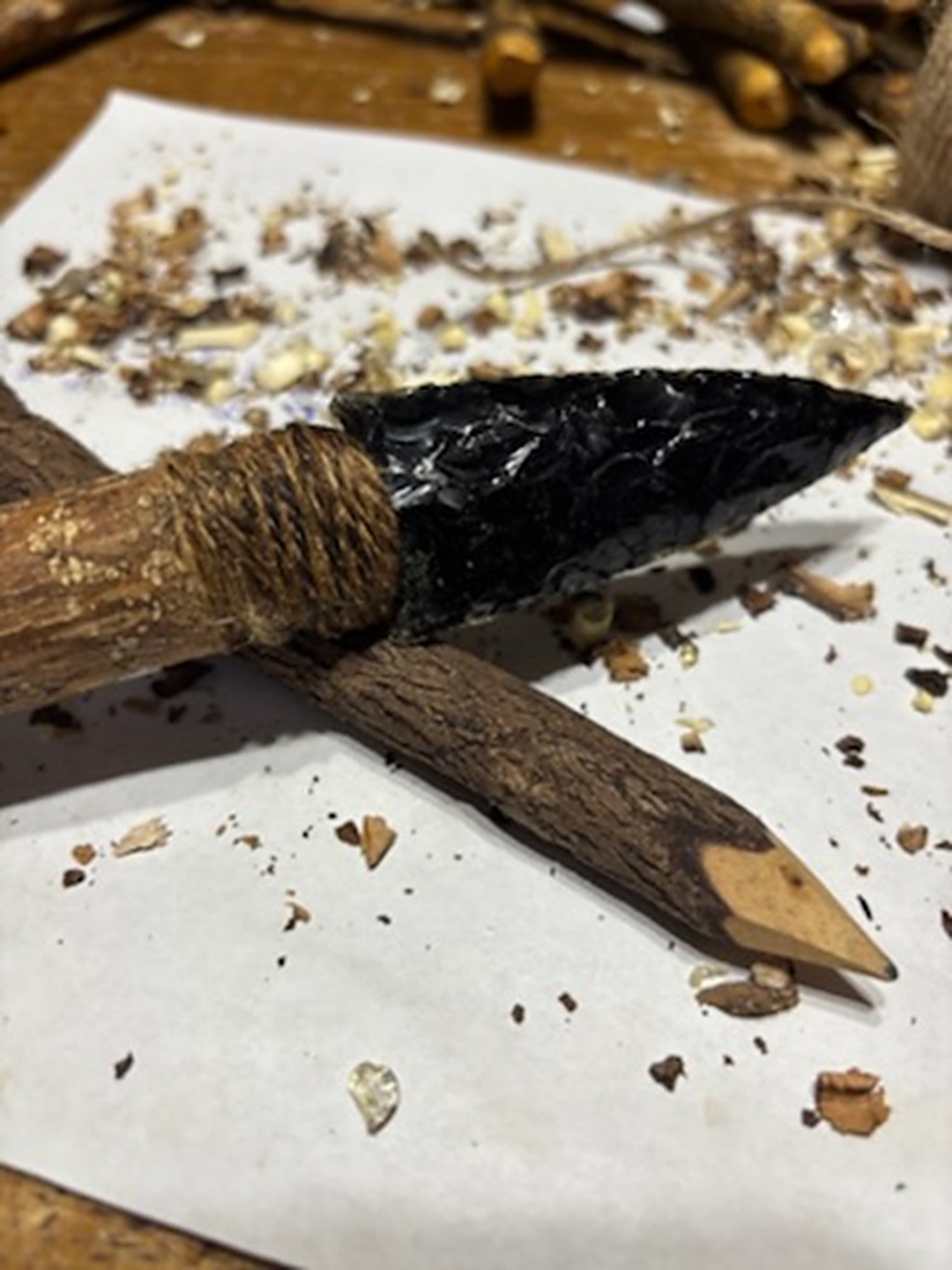
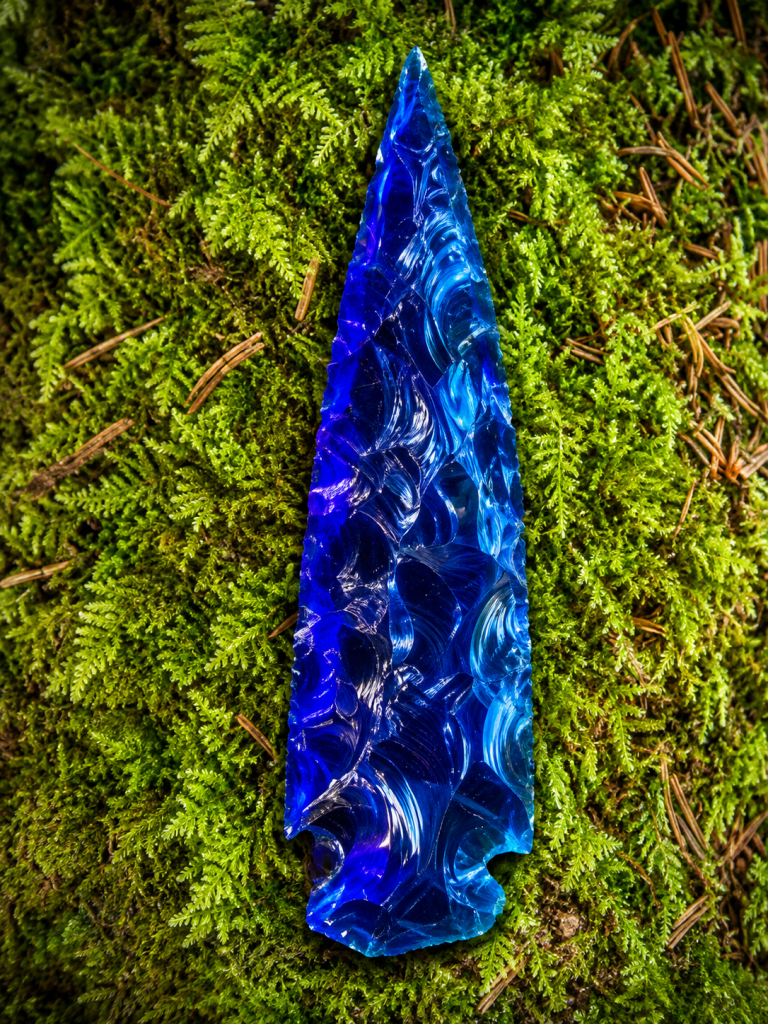
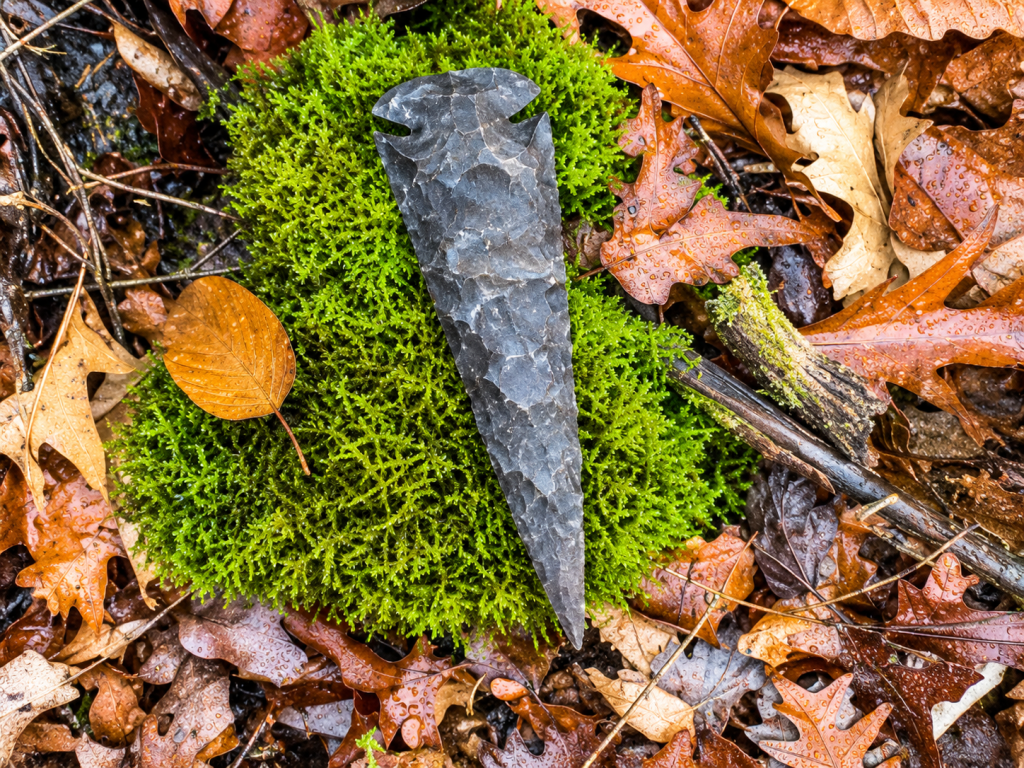
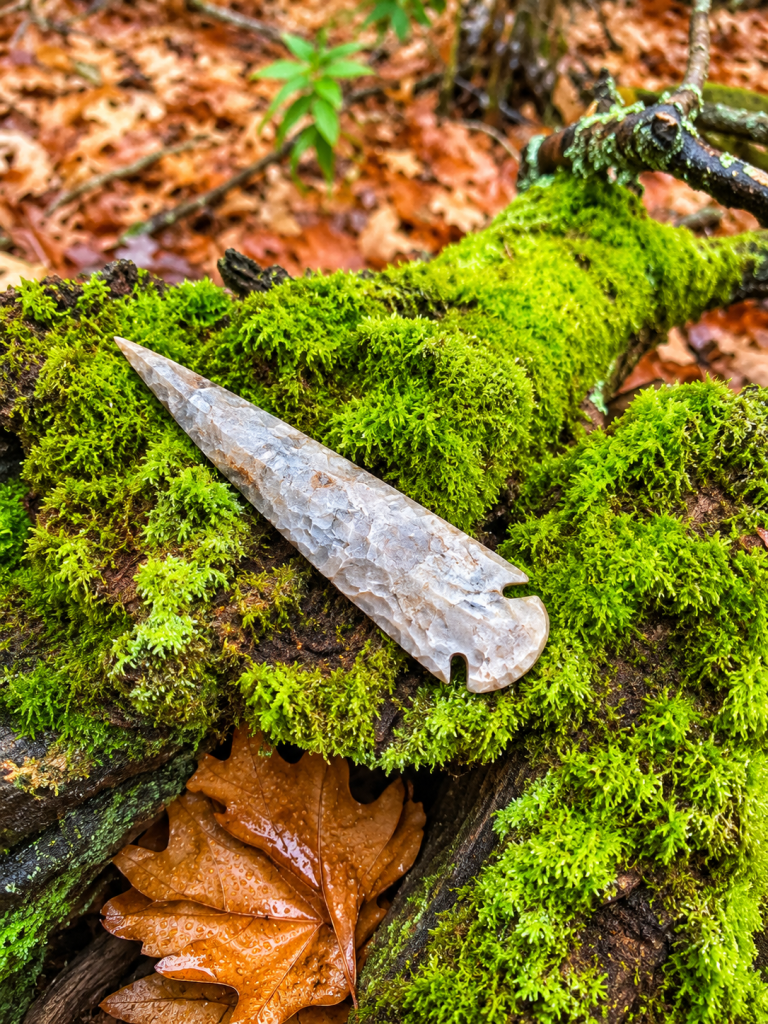
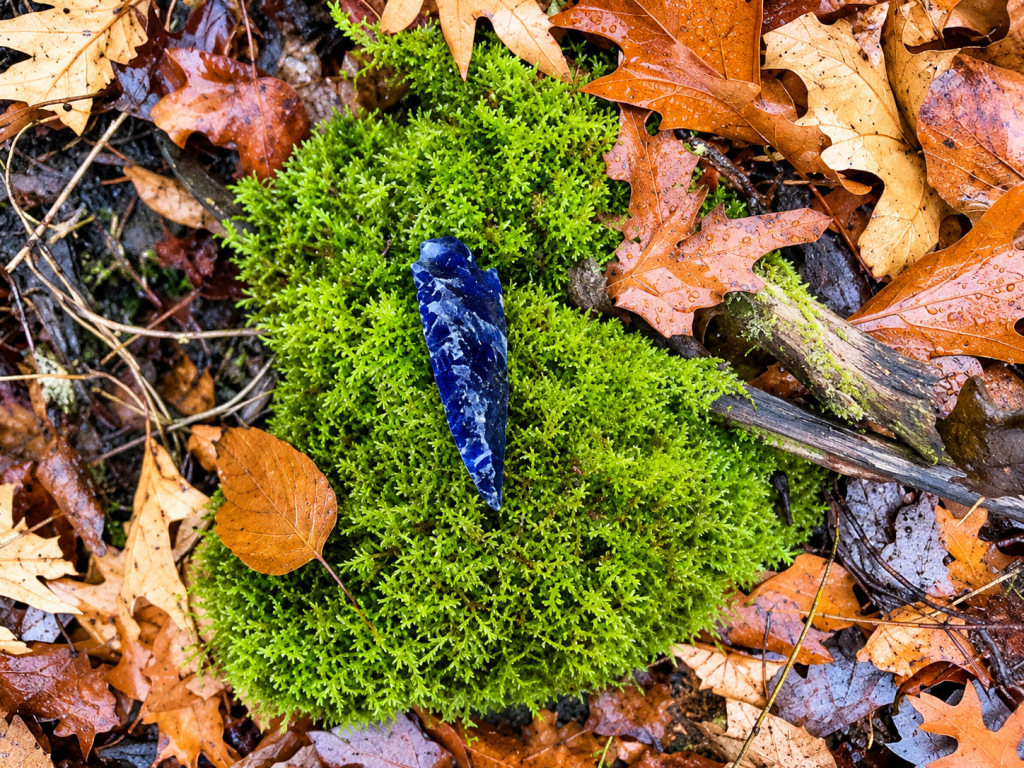
Obsidian is volcanic glass. It formed when lava cooled too fast to crystallise, so it breaks in smooth, shell-like curves. Flint formed slowly on ancient seabeds, and holds banded honey, grey and chalk-white.
Neither stone can be forced. Each strike follows fracture lines laid down long before us, which is why no two blades share a shape, a sheen or a single flake scar.
Obsidian
Volcanic glass with no grain. A freshly knapped edge can be finer than surgical steel.
Flint
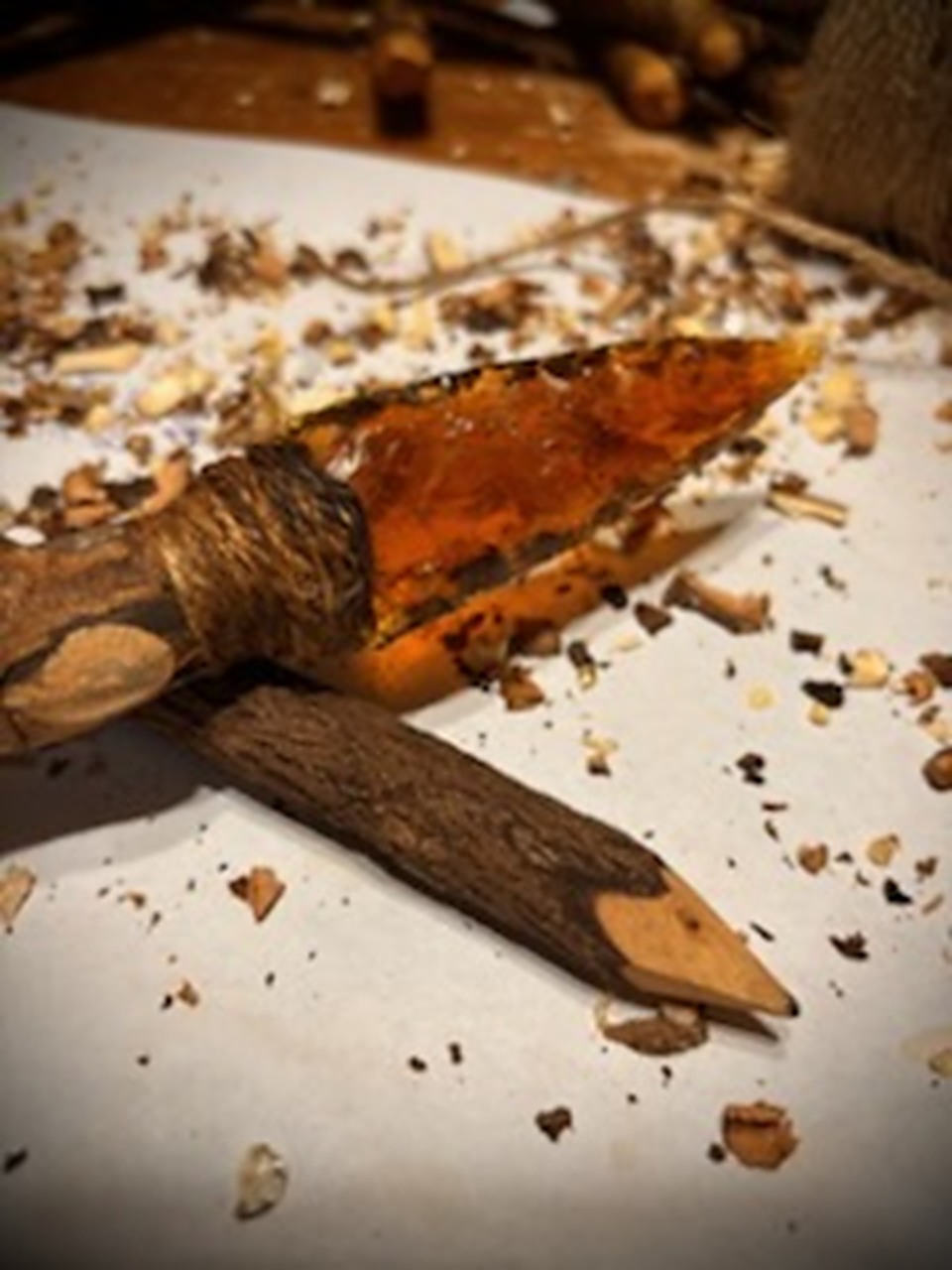
Silica from old seabeds, made of crystals too small to see. Tough, warm-toned and banded.
Never twice
Every flake scar is a record of one strike. The pattern is a fingerprint.
Ready-Made Knives
Available Now
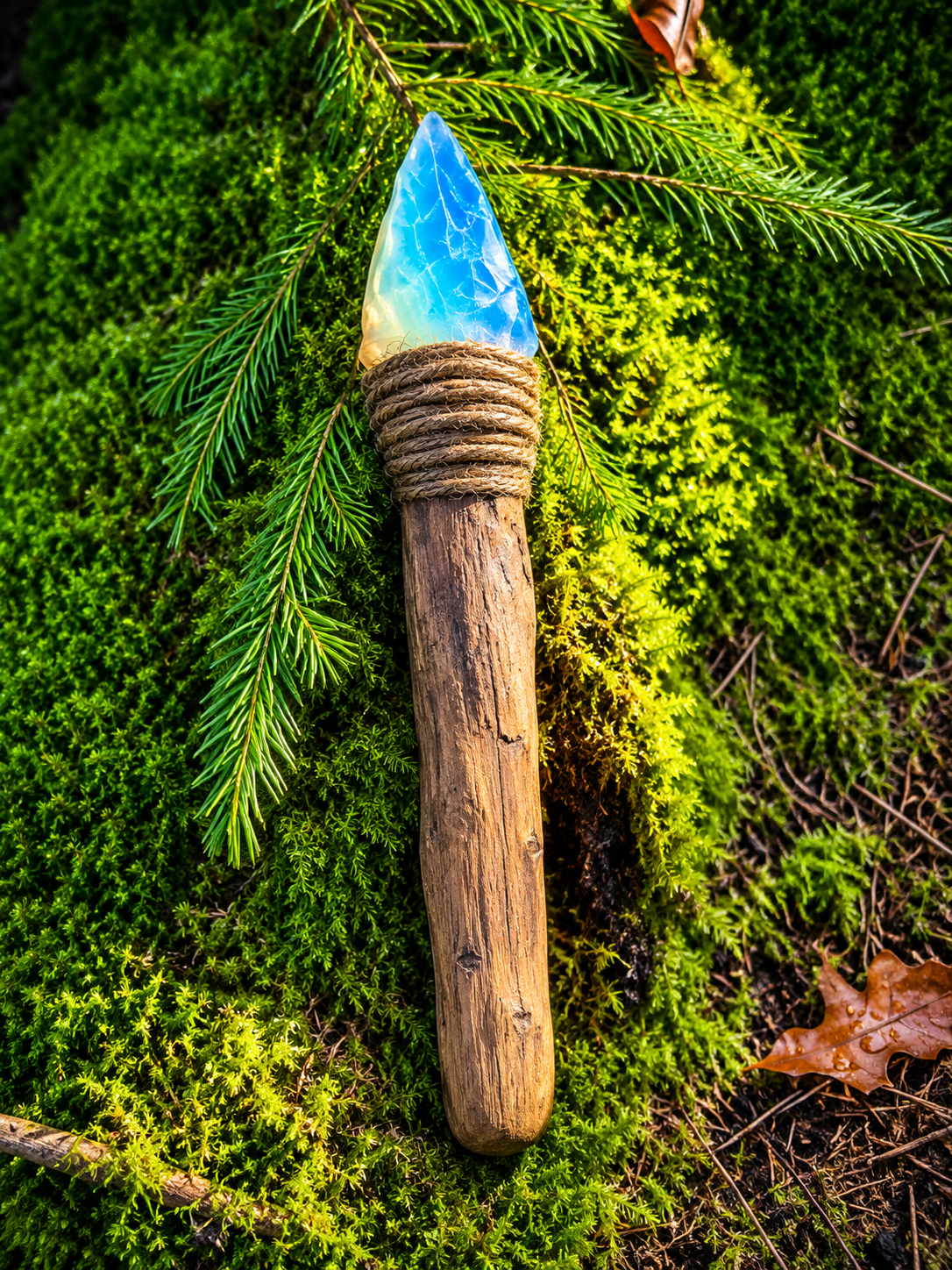
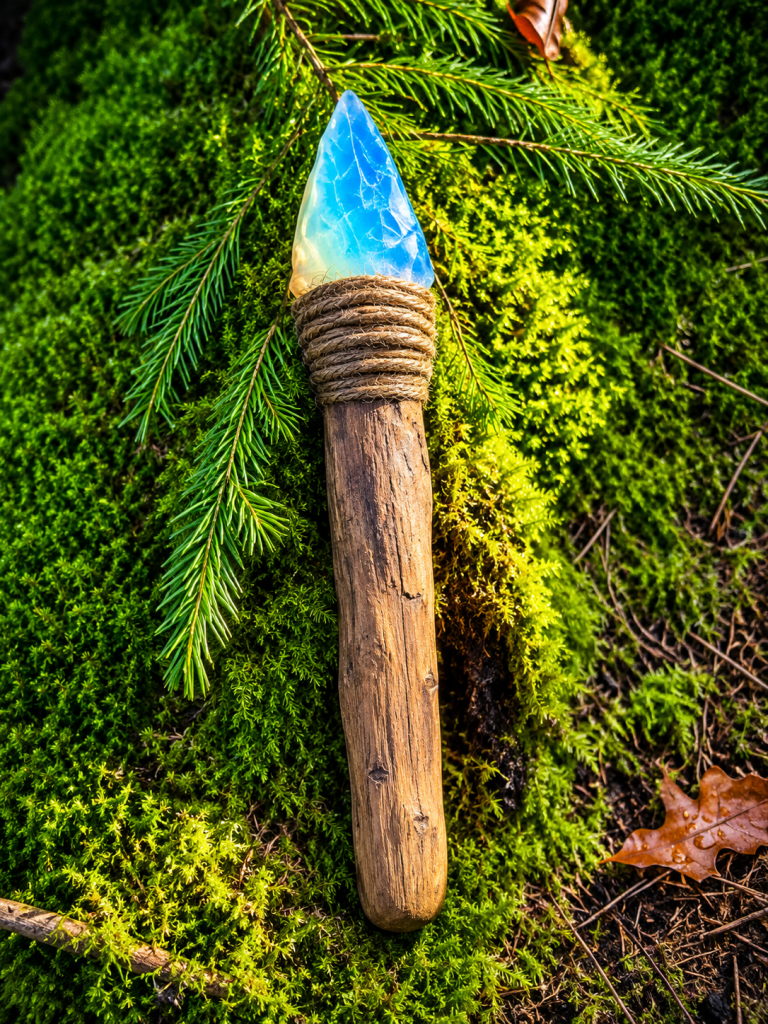
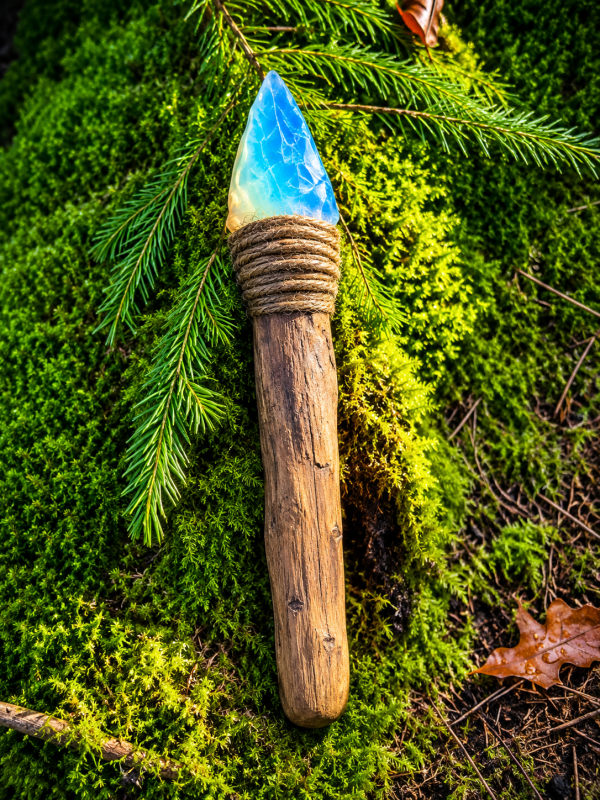
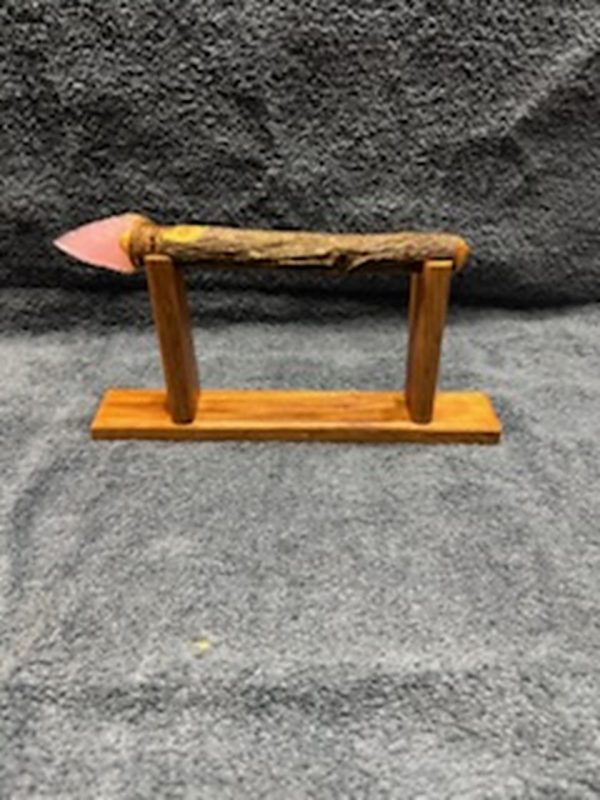
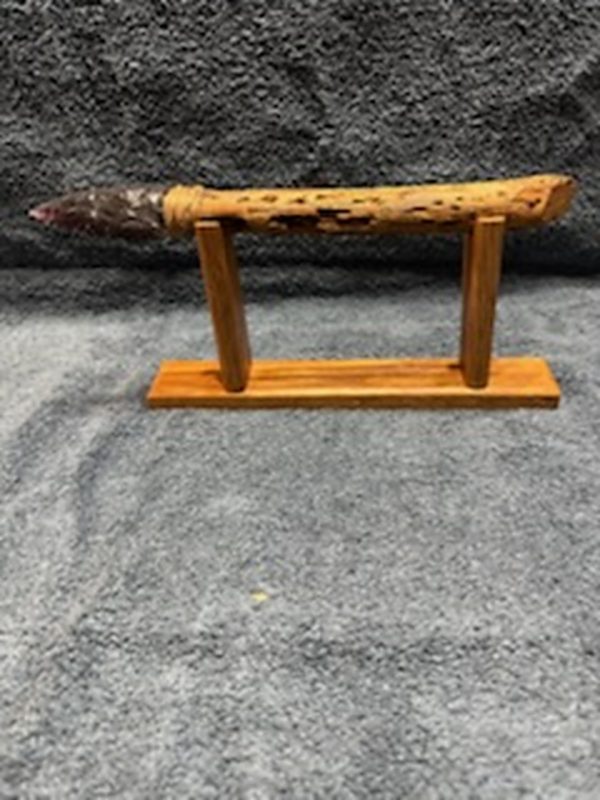
Finished, photographed and ready to leave the workshop. Each piece ships with its own bark and moss stand, care notes and a signed provenance card.
Some blades are made to mark something: a wedding, a retirement, a place in the woods that matters to you. Tell us the story, and we’ll choose the stone, shape and materials to carry it.
Blade material
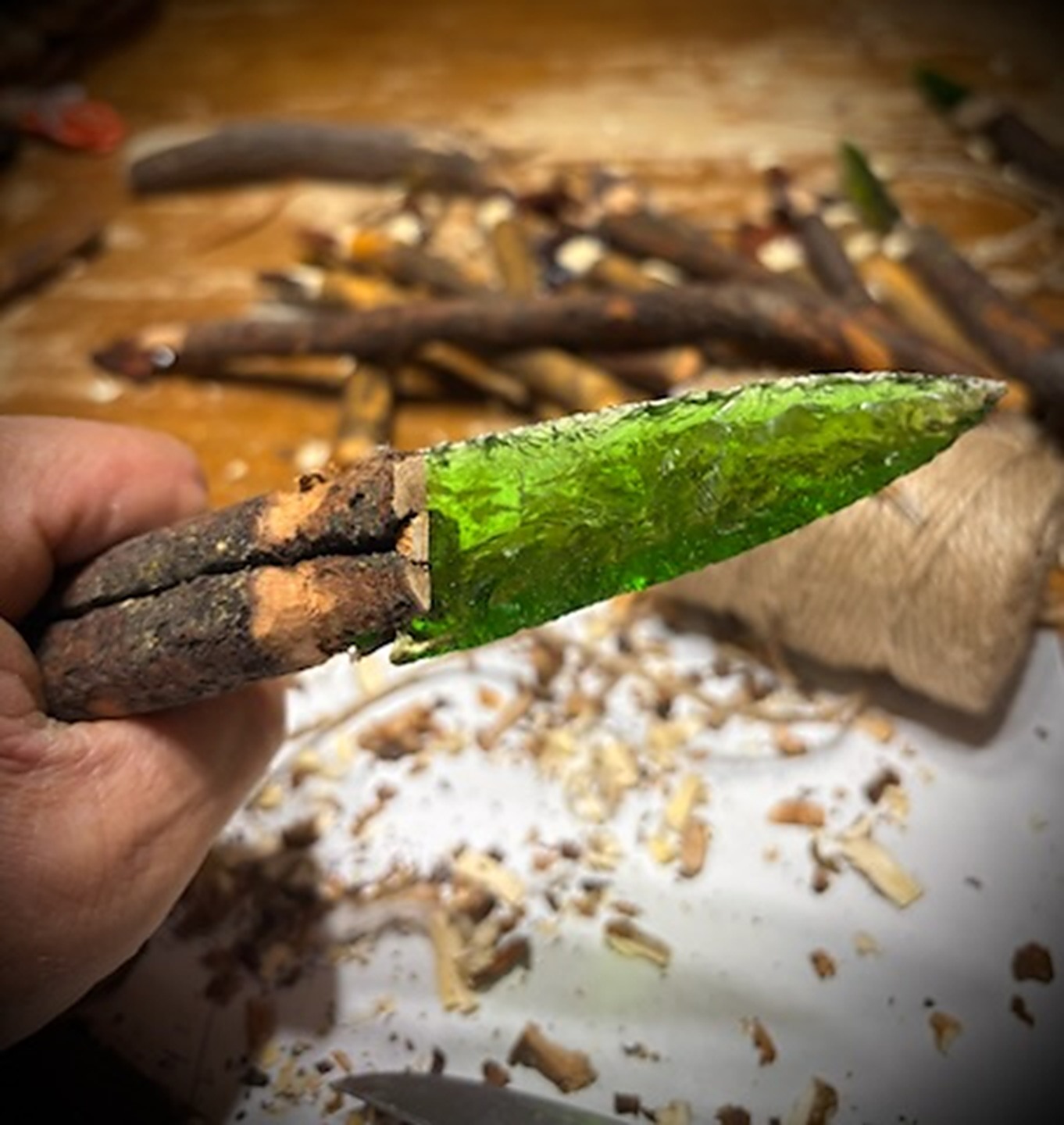
Black or mahogany obsidian, green glass, honey or banded flint
Now booking late-autumn commissions · typically 6–10 weeks
The craft
Patience, Stone & Hand
We use no machines and no moulds. Each knife is made the way stone blades were made for thousands of years, with hammerstone, antler and time. Small imperfections stay in, because they are proof it was made by hand.
01
Selecting the Stone
Every knife starts with a stone. We tap each nodule of obsidian and flint and listen: a clear ring means sound stone, a dull note means hidden fractures. We may test twenty pieces to find one worth working.
02
Shaping the Core
Heavy strikes with a hammerstone knock off the rough outer cortex and set the blade’s rough shape. Every blow has to be planned, because stone cannot be put back once it breaks away.
03
Flint Knapping
With an antler billet over a leather pad, we take broad, thin flakes across both faces. This is where the long, rippling scars appear, and where the stone decides how far it will go.
04
Refining the Edge
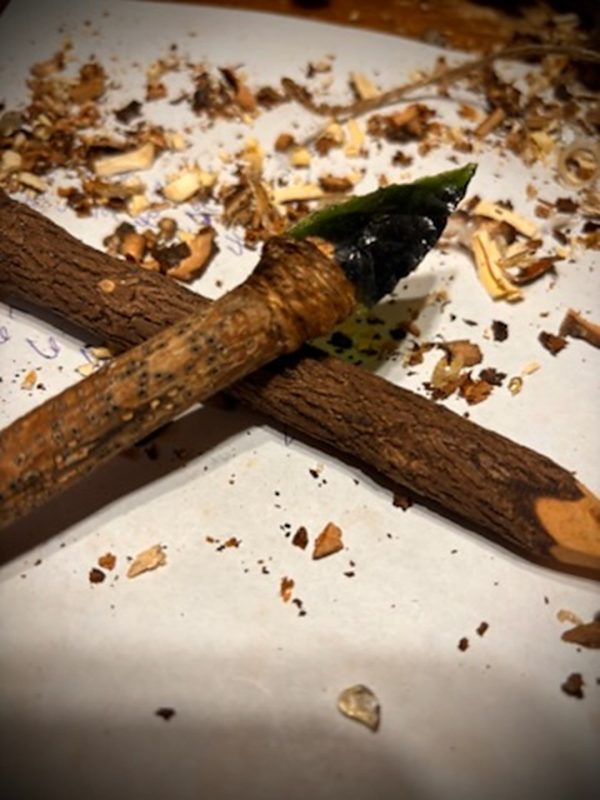
Pressure flaking with an antler tine takes off tiny flakes, one at a time, along the edge. It is slow work, often a whole evening by lantern light, and it gives the blade its serrated shine.
05
Handcrafting the Handle
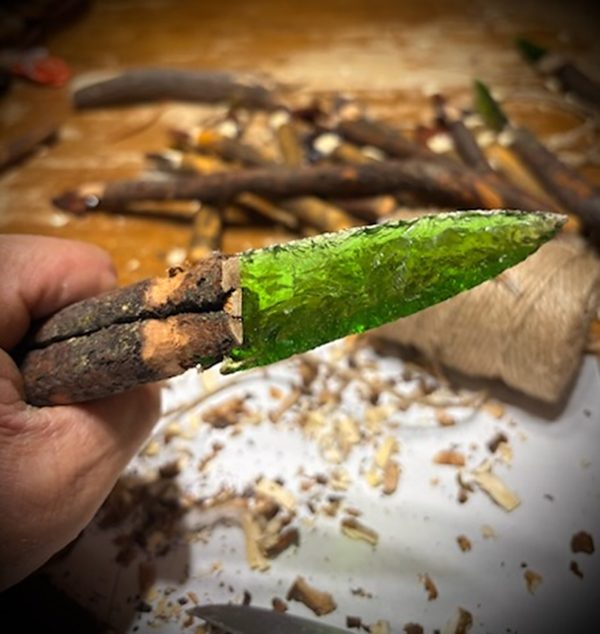
Handles come from fallen branches, shed antler and bone. We cut, season and shape them by hand, and we keep the bark, lichen and knots that make each one its own.
06
Final Assembly
The blade is set into the handle with pine pitch, then bound with sinew, rawhide or twine that tightens as it dries. Each finished piece gets its own bark and moss stand.
About the maker
Made by Hand. One Blade at a Time.
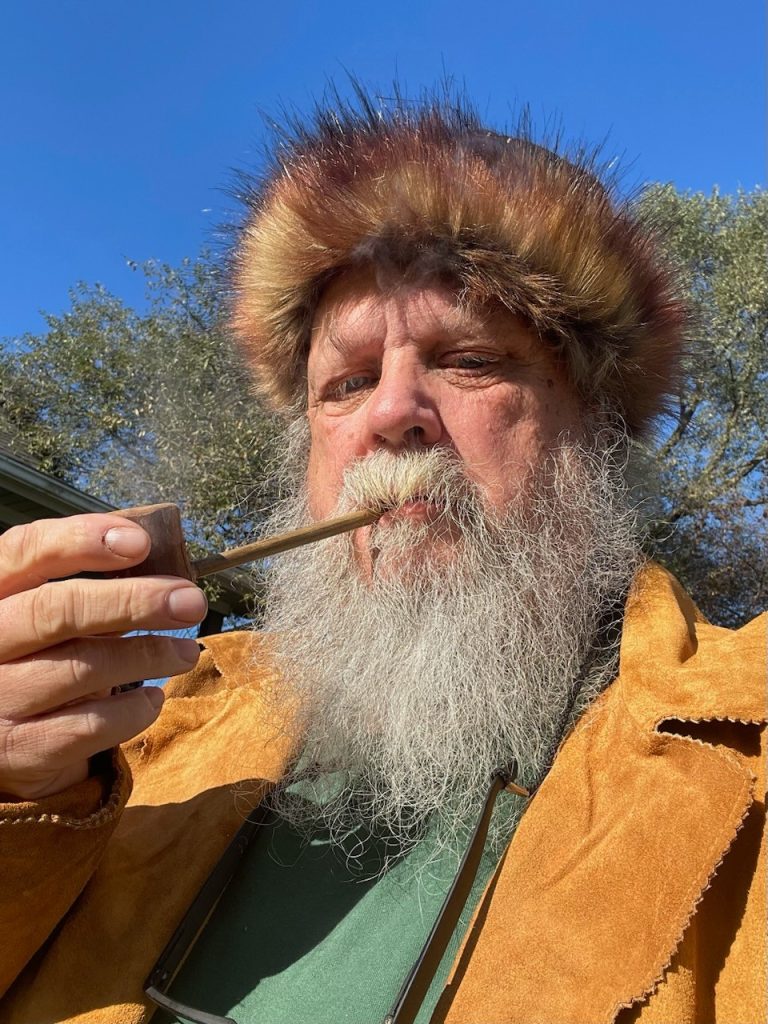
Jay Marion’s journey began with a broken arrowhead and a lifelong curiosity about how people once shaped stone, bone, wood, and leather by hand. Growing up exploring the Appalachian Mountains, he developed a deep connection to the land, its traditions, and the craftsmanship of generations past.
Today, Jay creates each piece in his small woodland workshop using carefully sourced stone, fallen branches, shed antler, and other natural materials. Every item is made slowly and intentionally, preserving old-world skills while sharing the rugged beauty and heritage of Appalachia.
“The stone always has the last word. My job is to listen closely enough to hear it.”